



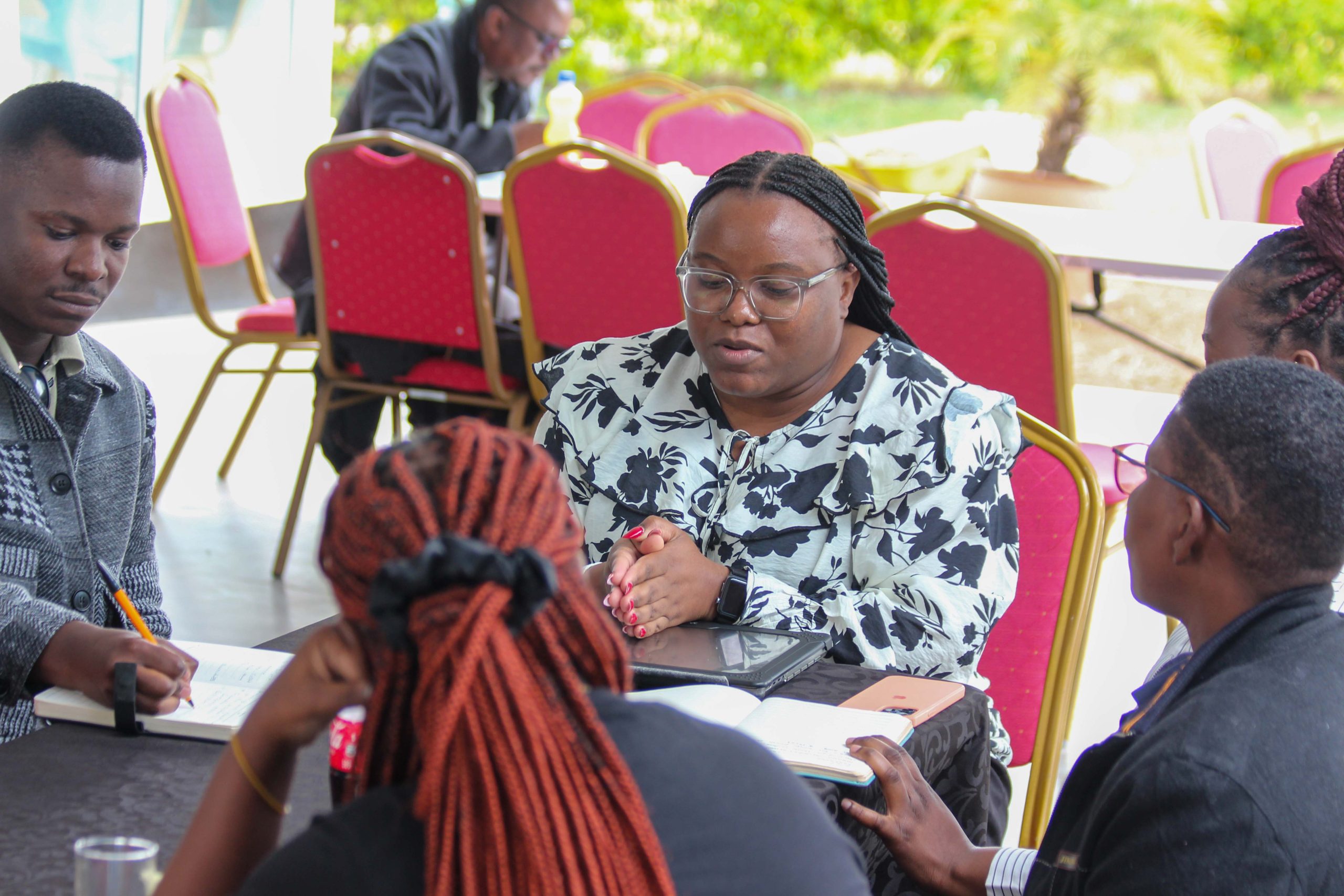


The HIV CUREiculum is Africa’s first community-led curriculum on HIV cure research. Originally developed with global partners and now led by the African Alliance, it equips communities, advocates, and policymakers with the knowledge and confidence to engage in cure science. Tested in Kenya and Zambia, the CUREiculum is shaping Africa’s leadership in the global search for an HIV cure.
The initiative began as a collaborative effort under the HIV Cure Africa Acceleration Partnership (HCAAP) and others, where community advocates, researchers, and technical experts came together to design learning tools for communities. This work produced six core modules grounded in community-friendly science communication and participatory learning.
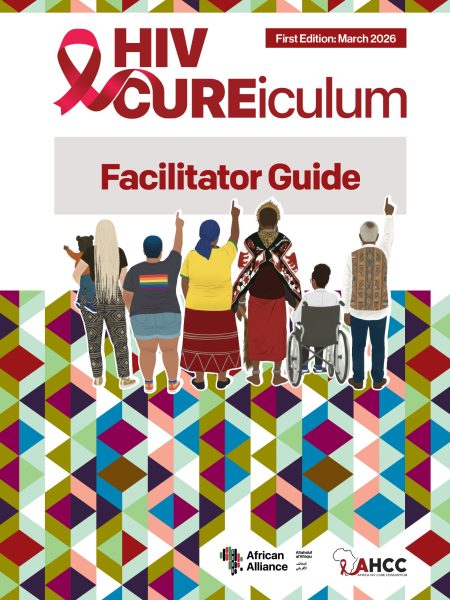
Facilitators Guide — CUREiculum Training & Facilitation
An essential planning and delivery resource for facilitators implementing the HIV CUREiculum across African community settings. This guide covers five core modules — from the rationale for an HIV Cure and research ethics, through to HIV persistence, clinical trials, and the role of communities and patients in cure strategies. It includes a full Toolbox with preparation checklists, budget templates, facilitation style guidance, daily interactives, activity props, and pre- and post-knowledge assessments. First tested with twenty Zambian HIV Cure advocates and co-created through a Community of Practice, this guide equips facilitating teams to deliver a contextually appropriate, ethically grounded, and impactful training experience.
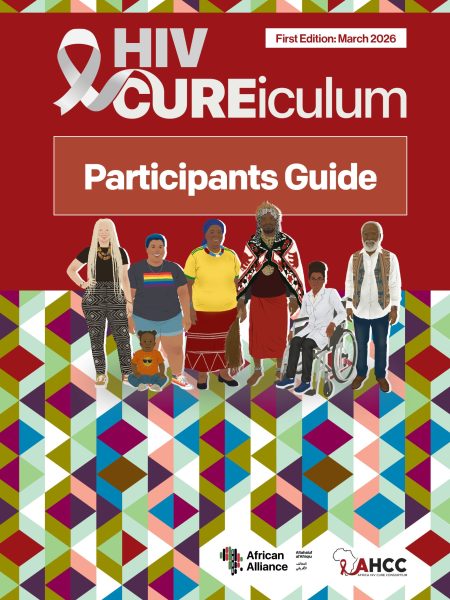
Participants Guide — CUREiculum Training & Facilitation
Designed for HIV Cure advocates and community-based programme participants, this guide walks learners through five modules covering the rationale for HIV Cure research, research ethics and leadership, HIV persistence, clinical trials history, and community-driven cure strategies. Each module is supported by practical tools including key terms glossaries, real-world case studies, ethics checklists, and an Action Plan to help participants introduce HIV Cure strategies to their own constituencies. Developed with input from advocates across Africa and rolling out in 2026 in Botswana, Cameroon, Kenya, South Africa, Uganda, and Zambia, the CUREiculum blends visual and narrative learning with daily MCQ assessments to build lasting knowledge for people living with HIV and those working alongside them.
Purpose
Without thoughtful planning, training can be clumsy and not achieve its objective. This guide provides simple tools to help partners plan and roll out the CUREiculum so everyone is ready and aligned.
This guide also highlights who should be involved so that the training is community-led and credible:
- People living with HIV in the community
- Community-based partners hosting the training
- Advocates and interested community members who have a stake in an HIV Cure
- Partner representatives and country leads
- A small coordination group or steering team
By following this process, community advocates can strengthen their leadership, organise effective training, and play an active role in shaping the path towards a community-led HIV Cure.
Approach
The African Alliance’s work centres people’s lived experiences, local knowledge and awareness of power dynamics.
This means the CUREiculum is designed with PLHIV at the centre – your history, context, and expertise matter just as much as the scientific content.
Learning is not only about information; it is also about how we learn together.
The CUREiculum was created using a hands-on, discussion-based approach in which participants helped shape and improve each module.
A designer and the training team reviewed the visuals, stories and explanations to make sure they made sense and supported learning.
Community feedback guided changes to language, images and teaching methods, all grounded in proven participatory and socio-behavioural practices.
Co-Creation
This CUREiculum is shaped as a shared journey led by community participants, the African Alliance team, clinical and scientific contributors from the AHCC, and our graphic and instructional designers.
The first draft of the CUREiculum was tested in community settings in Nairobi and Lusaka in 2025.
Through a collaborative process, complex HIV Cure science became clear and accessible, creating a tool that honours community expertise and strengthens community-led advocacy.
Structure
The HIV Cureiculum is designed as a participatory learning journey that combines science, community leadership, reflection, and practical facilitation skills. Each module follows a consistent structure that helps participants engage with complex HIV cure concepts in accessible, grounded, and community-centred ways. Through grounding exercises, interactive content sessions, group activities, teach-backs, reflection, and knowledge checks, participants build both scientific understanding and the confidence to translate HIV cure literacy into real community dialogue, advocacy, and leadership.

Process & Implementation
From Communities to Cure: A Pan-African Process Reimagining HIV Science
From the inception to Aug 2022
Partnerships
-
Partners: Treatment Action Group (TAG).
Aug 2022 – Jan 2023
6 Months
Concept Initiation
 Initial scoping to define community engagement priorities for HIV cure research education.
- From Slides to Structured CUREriculum.


Oct 2022 – Feb 2024
16 Months
HCAAP Engagement
-
African Alliance attending the Technical Working Groups under HCAAP.
Feb 2023 – May 2023
4 Months
Framework & Governance Setup
-
Defined curriculum vision and structure.

Jun 2023 – Nov 2024
17 Months
Technical Working Group
- Technical Working Group Monthly Meetings & Review.

Feb 2024 – Apr 2024
3 Months
Content Development & Review
- Completed 12 Key Informant Interviews (7 Community Advocates, 5 Scientists).
- To guide adaptation to adult learning principles and contextual relevance.


Jun 2024 – Oct 2024
5 Months
Module 1 & 2 Development
- First Draft: Modules 0–2 Developed.
- TWG-led Content Reviews and Expert Consultations.


Jun 2024 – Nov 2024
6 Months
Georgetown University
-
Georgetown University support and technical partnership.

Nov 2024 – Jan 2025
3 Months
Kenya Pilot Execution
- TWG Review and Expert Consultations before Nairobi Pilot.
- PILOT Nairobi, KENYA (Modules 1, 2).


Nov 2024 – Sep 2026
23 Months
Aidsfonds & Gates Foundation
-
Support and continued backing from Aidsfonds & Gates Foundation.
Apr 2025 – Jul 2025
4 Months
Testing, Refinement & Validation
- TWG Review and Expert Consultations before Lusaka Pilot.
- PILOT Lusaka, ZAMBIA (Modules 1, 2, 3, 4, 5, 6).
- Piloted with 20 active participants reflective of the diverse target group.


Sep 2025 – Dec 2025
4 Months
Instructional Design Process
- Collated live feedback and evaluative data on the module content and training methods.
- Instructional Design Process underway...


Jan 2026 – Mar 2026
3 Months
Sessions & Multimedia
- Conducted week long IN-CLASS SESSIONS of the modules.
- Video Introduction Pack Modules Recorded & Edited.


Apr 2026 – Oct 2026
7 Months
Deliverables
- 6 Master Trainers Trained on the HIV CUREriculum (South Africa, Kenya, Zambia, Botswana and Uganda).
- Development of and support of in-country cascading plans.
- MERL plans cocreated and support for rollout in Q2 of project period.
- Translation of the HIV CUREriculum to French and Swahili.


Nov 2026 – Dec 2026
Launch
Public Launch
- CUREriculum COP (including scientific custodians) as a mechanism for ongoing evolution.
- Public launch of a multilingual HIV CUREriculum on World AIDS Day (1 December 2026).

Custodians of The CUREiculum
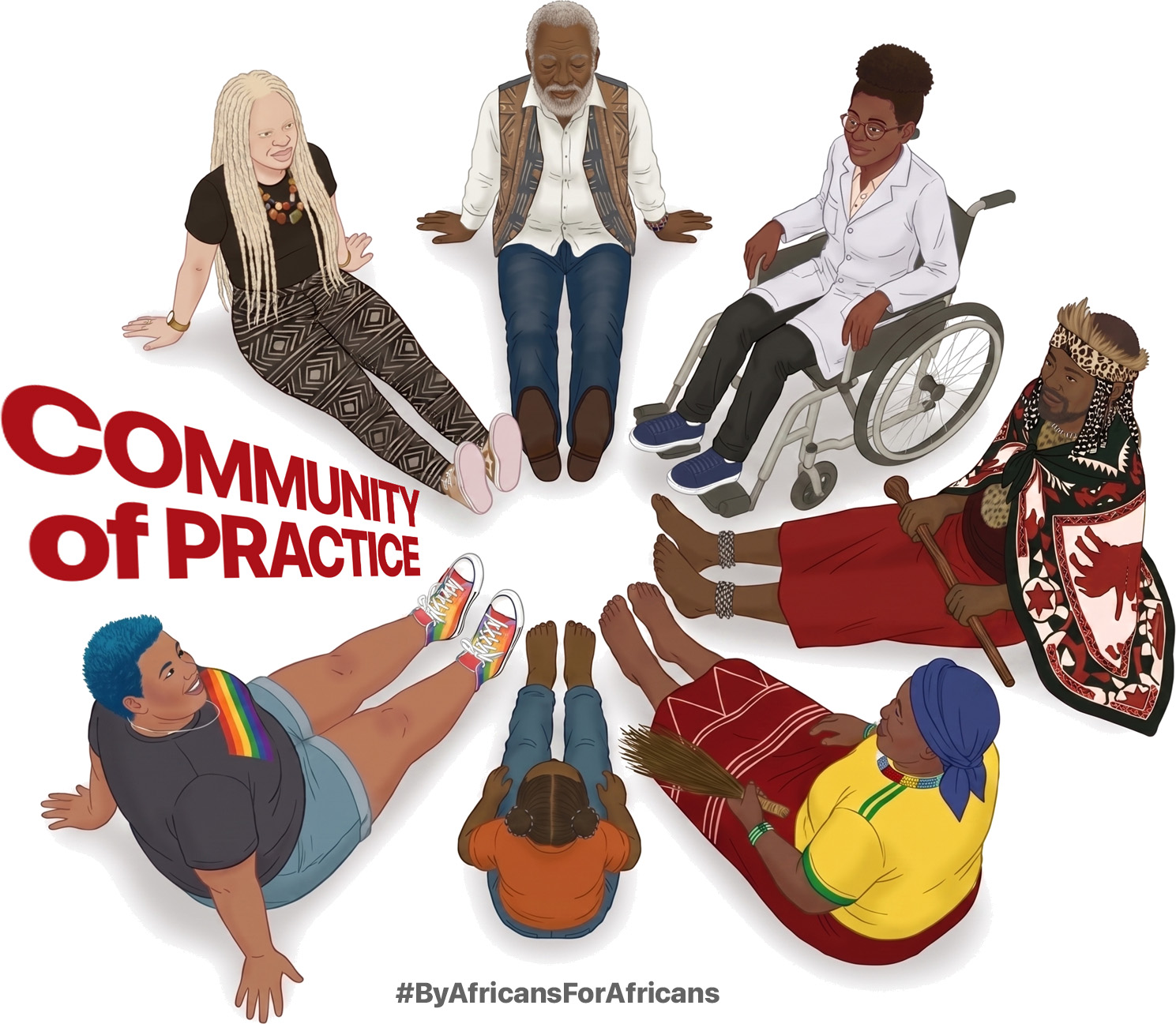
The HIV Cureiculum Community of Practice brings together trainers, advocates, researchers, and community leaders from all five regions of Africa to collectively strengthen HIV cure literacy, ethics, and community leadership across the continent. Meeting monthly, the Community of Practice serves as a collaborative space to explore emerging developments in HIV cure research, reflect on implementation experiences from different countries, and review recommendations and field insights that can inform the continued evolution of the Cureiculum.